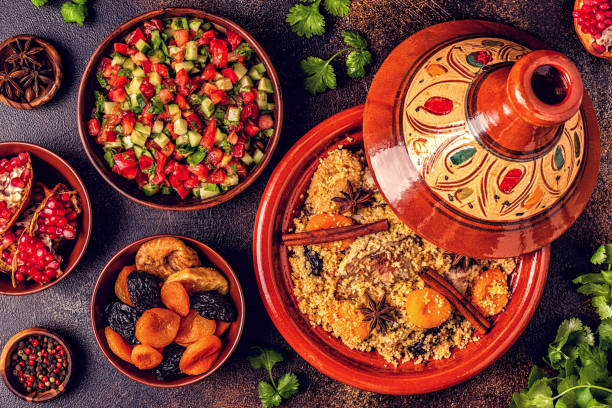
Moroccan cuisine is a blend of Berber, Arab, Andalusian, and Mediterranean influences. It's characterized by its use of spices like cumin, saffron, and cinnamon, and ingredients like lamb, couscous, and olives. Traditional cooking techniques include slow-cooking in tagines and grilling over open flames. This article highlights ten defining dishes of Moroccan food, providing insights into their recipes and cultural importance. Dive into the straightforward and rich world of Moroccan cooking.
- Tagine Tagine is both the name of the dish and the conical clay pot in which it is traditionally cooked. This slow-cooked stew combines meat (often lamb or chicken) with a medley of spices and dried fruits, resulting in a harmonious blend of sweet and savory flavors. The tagine pot's unique design allows for even cooking and condensation of steam, which infuses the dish with rich flavors. Its widespread use in Moroccan households and its presence in celebratory feasts make it a symbol of Moroccan culinary heritage.
Ingredients:
- 500g lamb or chicken, cut into pieces
- 2 onions, finely chopped
- 2 garlic cloves, minced
- 2 tsp ground cumin
- 2 tsp ground ginger
- 1 tsp ground cinnamon
- 2 tbsp olive oil
- 1 cup dried apricots or prunes
- Salt and pepper to taste
- Fresh coriander for garnish
Instructions:
- In a tagine or heavy-bottomed pot, heat the olive oil and brown the meat.
- Add the onions and garlic, and sauté until translucent.
- Add the spices and stir well.
- Add enough water to cover the meat, bring to a boil, then reduce to a simmer.
- Add the dried fruits and simmer for 1-2 hours until the meat is tender.
- Garnish with fresh coriander before serving.